What does % elongation actually tell us in a tensile test?
What does % elongation actually tell us in a tensile test?
When we talk about tensile testing, we often focus on tensile strength (MPa). But another important result is % elongation.
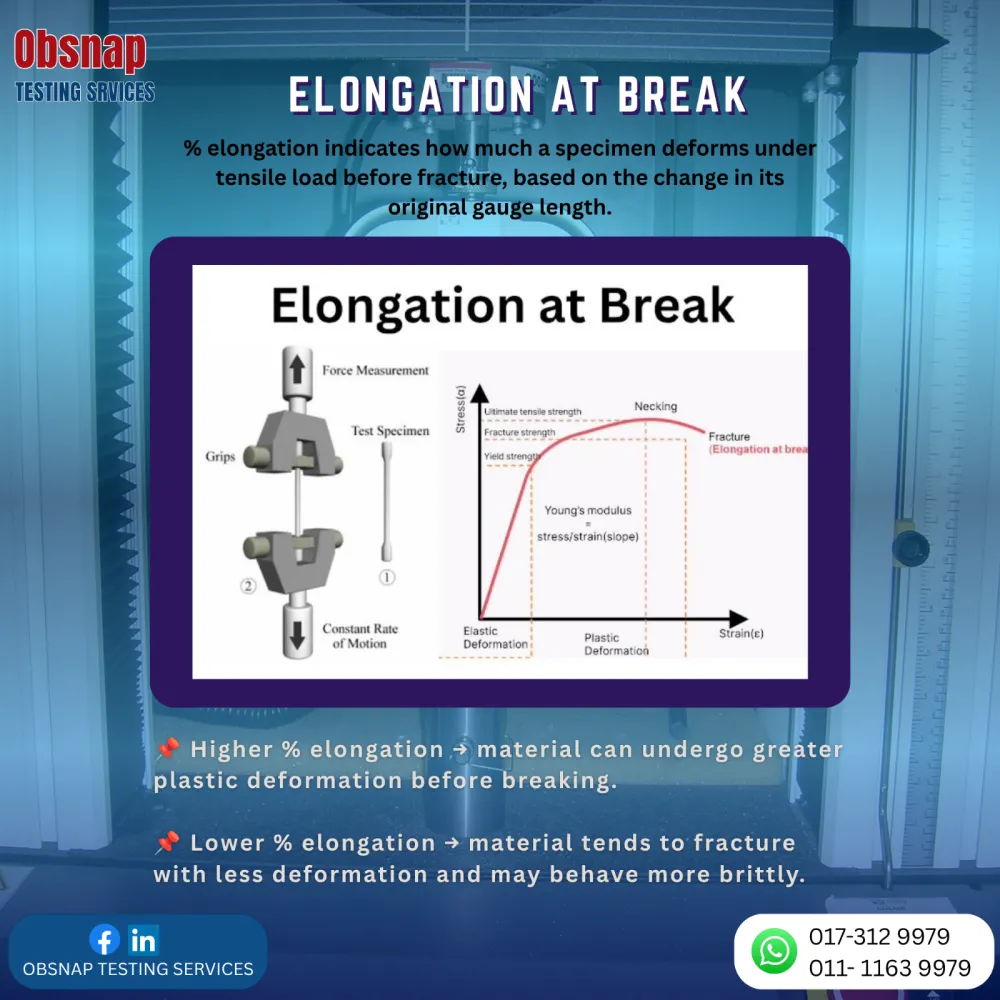
% elongation indicates how much a specimen deforms under tensile load before fracture, based on the change in its original gauge length.
📌 Higher % elongation → material can undergo greater plastic deformation before breaking.
📌 Lower % elongation → material tends to fracture with less deformation and may behave more brittly.
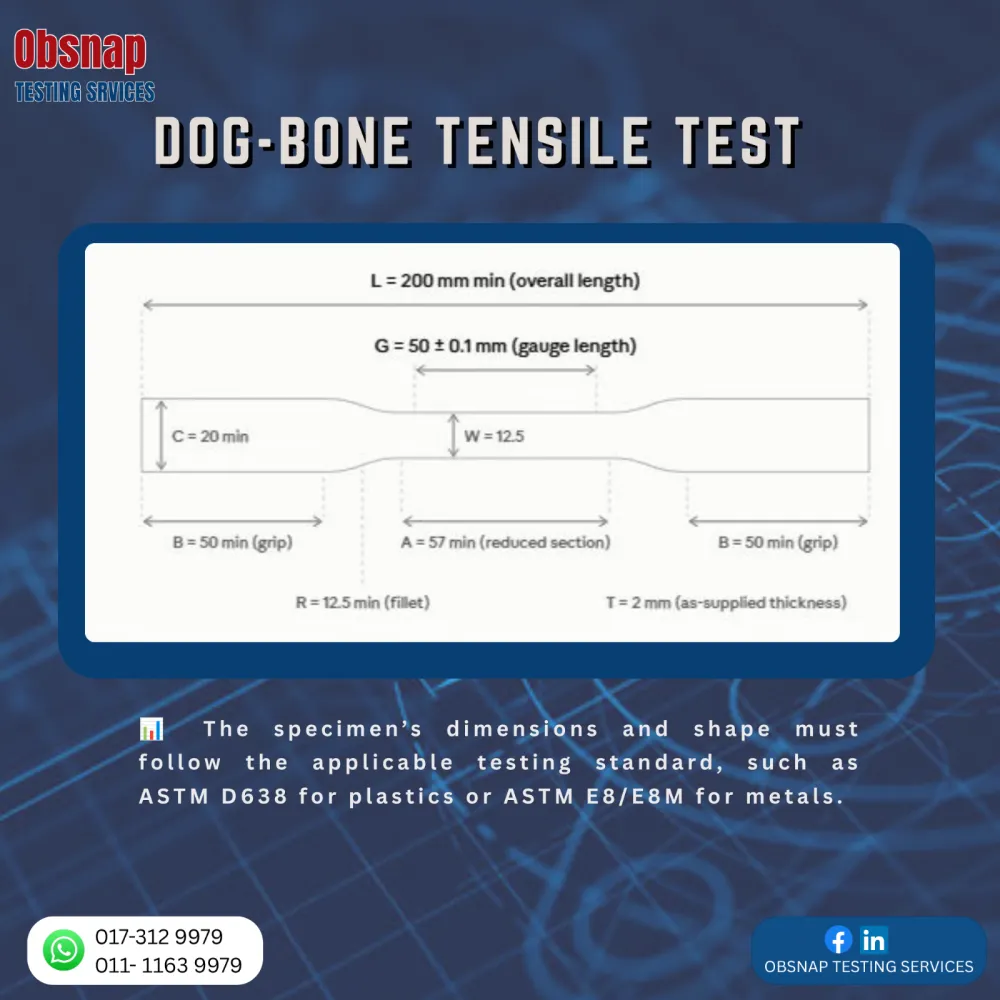
The result can also be influenced by factors such as material properties, specimen dimensions, gauge length and test speed.
So, two materials may have similar tensile strength but show very different elongation behaviour.
That’s why tensile results should not be judged from MPa alone — looking at both strength and elongation gives a better understanding of the material’s mechanical behaviour.
📩 If you need assistance with tensile testing or other testing requirements, feel free to reach out to me.
Amira | 017-312 9979
#TensileTesting #MaterialTesting #UTM #Obsnap Testing
12 Oct 2026